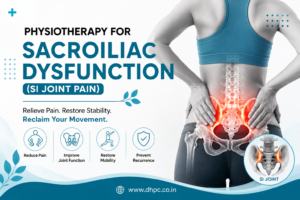
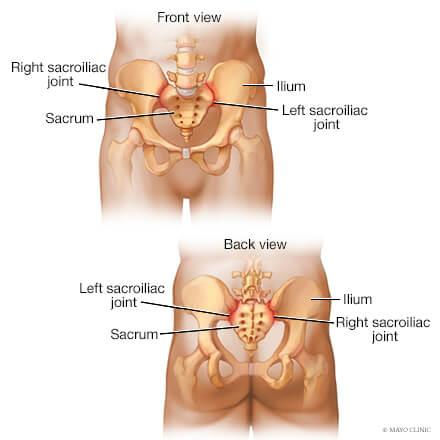
Sacroiliac (SI) dysfunction is a common but often overlooked cause of lower back pain. It originates from the sacroiliac joint, the joint connecting your spine (sacrum) to your pelvis (ilium).
If you’ve been experiencing:
- Pain on one side of the lower back
- Pain radiating to the buttocks or thighs
- Discomfort while sitting, standing, or turning in bed
The SI joint could be the underlying issue.
Symptoms of Sacroiliac Joint Dysfunction
Recognising early symptoms can help you seek timely physiotherapy for sacroiliac dysfunction:
- Pain on one side of the lower back
- Pain radiating to the buttocks or thighs
- Discomfort while sitting or standing
- Pain when turning in bed
- Difficulty walking or climbing stairs
These symptoms are often confused with general back pain, delaying proper care.
What Causes SI Joint Pain?
Common causes include
- Poor posture and prolonged sitting
- Muscle imbalance in the hips and core
- Injury or sudden twisting movements
- Pregnancy or postnatal changes
- Uneven weight distribution
Without correction, these factors continue to strain the SI joint.
Why Choose Physiotherapy for Sacroiliac Dysfunction?
Physiotherapy for sacroiliac dysfunction is one of the most effective, non-invasive ways to treat SI joint pain. Unlike temporary pain relief methods, physiotherapy focuses on correcting the root cause.
How Physiotherapy Helps SI Joint Dysfunction
1. Pelvic Alignment Correction
Restores proper positioning of the SI joint and pelvis using manual therapy.
2. Pain Relief & Joint Mobilisation
Reduces stiffness and improves joint movement for faster recovery.
3. Muscle Balance Restoration
Strengthens weak muscles (core, glutes) and releases tight structures.
4. Stability Training
Improves support around the SI joint to prevent recurring pain.
5. Posture & Movement Correction
Addresses faulty daily movements that overload the SI joint.
Why SI Joint Pain Keeps Returning
Many people try to manage sacroiliac (SI) joint pain with rest, painkillers, or quick treatments. These may give temporary relief, but the pain often comes back after some time.
This happens because the main problem is usually not treated.
If your pelvis is not properly aligned, it puts extra stress on the sacroiliac joint. Poor posture, especially sitting for long hours, can make some muscles tight and others weak. This creates an imbalance in the body.
Because of this, everyday activities like sitting, standing, or walking continue to strain the joint again and again.
So even if the pain reduces for a while, the root cause is still there—and the pain returns.
This is why physiotherapy for sacroiliac dysfunction is important. It focuses on correcting alignment, improving muscle balance, and helping your body move properly, so the pain doesn’t keep coming back.
The DHPC Approach to SI Joint Pain
At Dr Harsha’s Physiotherapy Clinic (DHPC), the focus is on treating the root cause, not just the symptoms.
Detailed Assessment Includes:
- Pelvic alignment
- SI joint mobility
- Muscle imbalances
- Movement patterns
Treatment Includes
- Advanced physiotherapy techniques
- Manual therapy & joint mobilisation
- Myofascial release
- Targeted strengthening programs
- Posture and ergonomic correction
DHPC’s goal is to restore pain-free movement and long-term stability.
When Should You See a Physiotherapist?
You should consider physiotherapy for sacroiliac dysfunction if:
- Your lower back pain is one-sided
- Pain worsens with sitting or standing
- Symptoms keep recurring
- Medication provides only temporary relief
Early intervention leads to faster recovery.
Conclusion
Sacroiliac dysfunction is a condition that can significantly affect daily life, but it is also highly treatable when approached correctly.
Physiotherapy for sacroiliac dysfunction offers a natural, non-invasive way to relieve pain, restore alignment, and improve overall function. More importantly, it addresses the root cause, helping prevent the recurrence of symptoms.
If your lower back pain has been persistent or keeps returning despite treatment, it may be time to look beyond temporary solutions.
Looking for Expert Care in Bangalore?
If you are experiencing SI joint pain or ongoing lower back discomfort,
Dr Harsha’s Physiotherapy Clinic (DHPC) offers a personalised and holistic approach to help you recover and move pain-free.
Book your consultation today and take the first step toward long-term relief.
Patient Testimonial: Sacroiliac (SI) Joint Pain Recovery
Hear how a patient overcame sacroiliac (SI) joint pain with physiotherapy at Dr. Harsha’s Physiotherapy Clinic (DHPC). This real experience highlights how addressing the root cause can lead to lasting relief and improved movement.