In recent years, many women have been diagnosed with conditions like PCOD (Polycystic Ovarian Disease) and a bulky uterus (including adenomyosis or prolapse-related changes). While medical management remains essential, there is growing interest in supportive, non-invasive approaches that can improve internal organ function.
At Dr Harsha’s Physiotherapy Clinic (DHPC), we have been using visceral osteopathy as part of a structured physiotherapy approach. In this article, we share our clinical experience along with ultrasound (USG) observations that highlight its potential benefits.
PCOD and a bulky uterus are often associated with:
- Hormonal imbalance
- Reduced pelvic circulation
- Organ mobility restrictions
- Chronic inflammation
- Postural and mechanical factors
These factors can affect how internal organs function and interact with surrounding structures.
What Is Visceral Osteopathy?
Visceral osteopathy is a gentle, hands-on technique that focuses on improving the mobility and function of internal organs. It works by releasing restrictions around organs, improving circulation, and restoring natural movement.
This approach does not replace medical treatment but supports the body’s ability to function more efficiently.
Clinical Observations from Practice
Case-Based Observation (Pre–Post Ultrasound Comparison)
In our clinical practice, we observed measurable changes in pelvic organ parameters in individuals undergoing visceral osteopathy as part of physiotherapy care.
Case 1: Bulky Uterus (Adenomyosis Features)
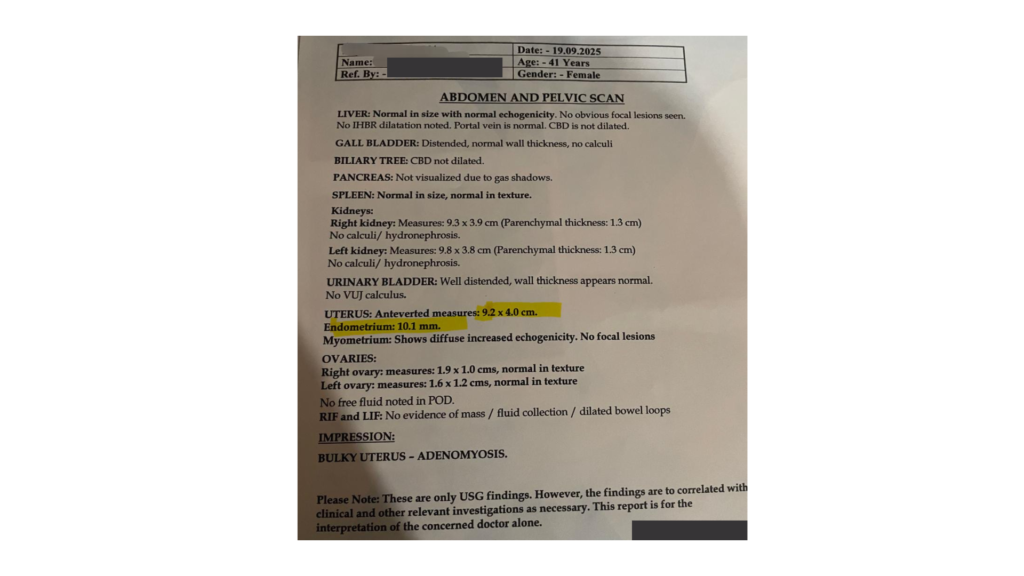
A 41-year-old female presented with complaints of pelvic discomfort and heaviness, and had been previously diagnosed with a bulky uterus (adenomyosis) on ultrasound. She was looking for a supportive approach to improve her condition and overall comfort.
Before Treatment (Initial USG Findings)
- Uterus: Anteverted, measuring 9.2 × 4.0 cm
- Endometrium: 10.1 mm
- Myometrium: Diffuse increased echogenicity
Impression: Bulky uterus – adenomyosis
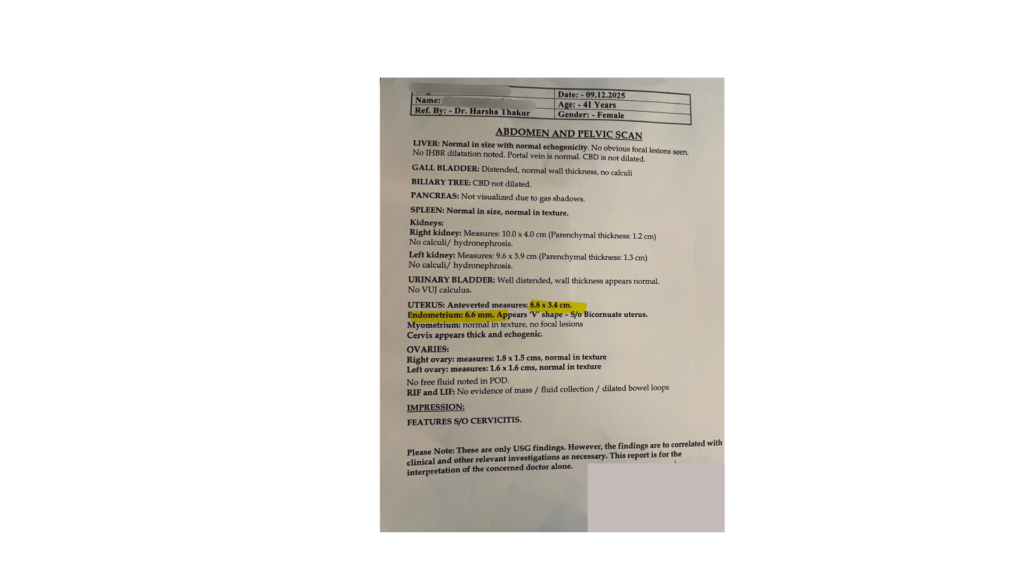
After Physiotherapy with Visceral Osteopathy (Follow-up USG)
- Uterus: Reduced to 8.8 × 3.4 cm
- Endometrium: 6.6 mm
- Myometrium: Normal echotexture, no focal lesions
Impression: Features suggestive of cervicitis, no bulky uterus changes noted
Clinical Changes Observed
- Reduction in uterine size (bulk)
- Improvement in endometrial thickness
- Better uterine tissue quality (echotexture)
- Reduction in features associated with adenomyosis
Along with these changes, the individual reported improved comfort and a reduction in pelvic heaviness, indicating both structural and functional improvement.
Clinical Interpretation
This case suggests that visceral osteopathy, as part of physiotherapy, may help improve pelvic circulation, reduce internal congestion, and support better organ function.
While results may vary, such changes highlight the importance of addressing organ mobility and internal balance, not just symptoms.
Case 2: Reduction in Uterine Size and Ovarian Volume with Associated Findings
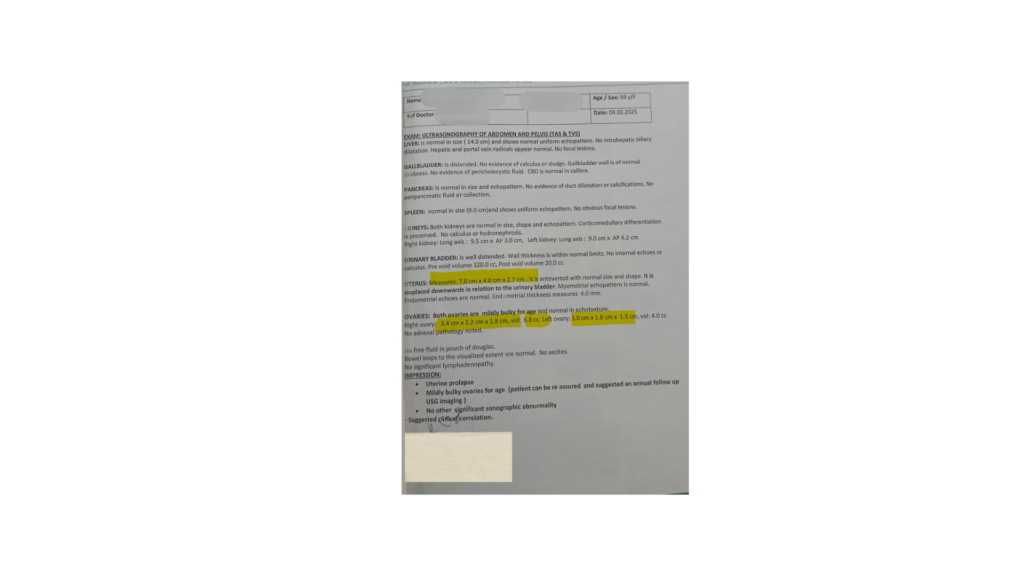
A 59-year-old female presented with general abdominal discomfort and internal health concerns. Her ultrasound findings showed mild uterine displacement, fatty liver (Grade 1), and ovarian measurements within normal but monitored range. She was looking for a supportive, non-invasive approach to improve internal function and overall well-being.
Before Treatment (Initial USG Findings)
- Uterus: 7.0 × 4.0 × 2.7 cm, mildly displaced
- Endometrium: 4.0 mm
- Right ovary: 3.4 × 2.2 × 1.8 cm (Vol: 6.8 cc)
- Left ovary: 3.0 × 1.8 × 1.3 cm (Vol: 4.0 cc)
- Impression:
- Uterine prolapse features
- Mildly bulky ovaries for age
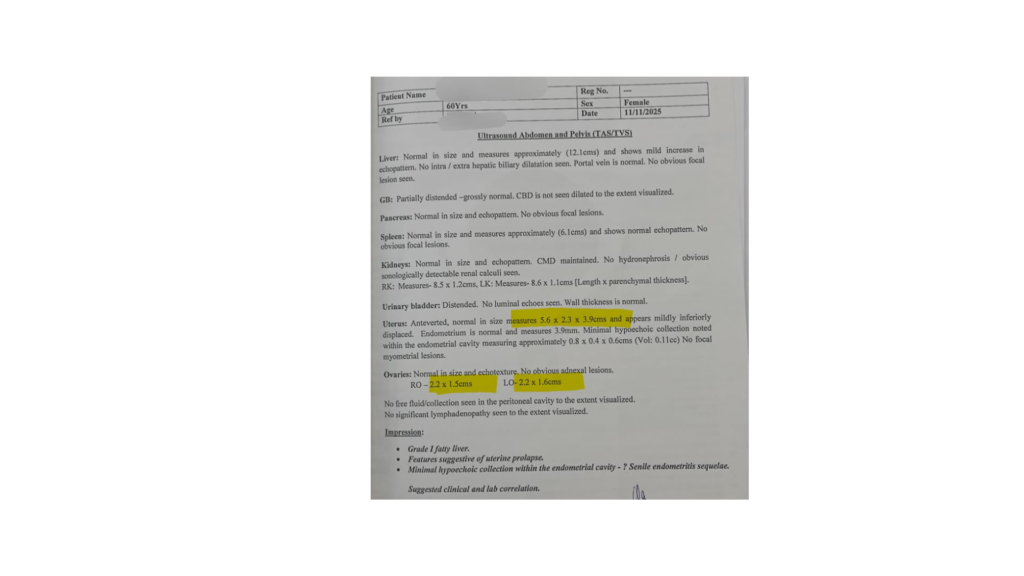
After Physiotherapy with Visceral Osteopathy (Follow-up USG)
- Uterus reduced to: 5.6 × 2.3 × 3.9 cm
- Endometrium: 3.9 mm
- Right ovary: 2.2 × 1.5 cm
- Left ovary: 2.2 × 1.6 cm
- Additional findings:
- No significant abnormal collections
- Improved internal organ positioning
Clinical Changes Observed
- Reduction in uterine size and displacement
- Decrease in ovarian volume
- Improved pelvic organ alignment
- Supportive improvement in internal organ function
Alongside these changes, the individual reported feeling lighter, with reduced abdominal discomfort and improved overall ease, reflecting both structural and functional benefits.
Clinical Interpretation
This case highlights how visceral osteopathy can support internal organ mobility, circulation, and functional balance.
The observed changes suggest:
- Better organ positioning and movement
- Reduced internal congestion
- Improved pelvic and abdominal function
Important Note
These observations are based on serial ultrasound findings and clinical follow-up.
Visceral osteopathy is used as a supportive therapy alongside medical care, and outcomes may vary for each individual.
Who Can Consider This Approach?
This physiotherapy approach may be beneficial for individuals with:
- PCOD / PCOS
- Bulky uterus/adenomyosis
- Pelvic pain or discomfort
- Digestive issues
- Early-stage fatty liver
- Postural and abdominal restrictions
Our Approach at DHPC
At DHPC, every treatment begins with a detailed assessment to understand the root cause. Based on this, we combine:
- Visceral osteopathy
- Manual therapy
- Movement correction
- Individualised exercise programmes
This integrated approach helps improve both structure and function.
Conclusion
From our clinical experience and ultrasound observations, visceral osteopathy shows promising results as a supportive physiotherapy approach for conditions like PCOD and a bulky uterus.
Focusing on internal organ mobility and circulation helps create a better environment for healing and functional improvement.
Disclaimer
This article is based on clinical observations and is intended for educational purposes. Individuals are advised to consult their doctor for diagnosis and medical management.If you are facing concerns like PCOD, a bulky uterus, or digestive issues, visit DHPC for a personalised physiotherapy assessment. Our approach focuses on identifying the root cause and supporting recovery through targeted care. You can call 9886400200 or 080-41320407, or visit www.dhpc.co.in to book your appointment.